Parking Lot Striping in Tampa, FL
Faded lines make a lot confusing, slower to park in and harder to defend when someone gets hurt. Here is what goes into striping a commercial lot properly, from layout and accessible spaces to paint choice and timing.
Call (656) 208-2400 for a Free Estimate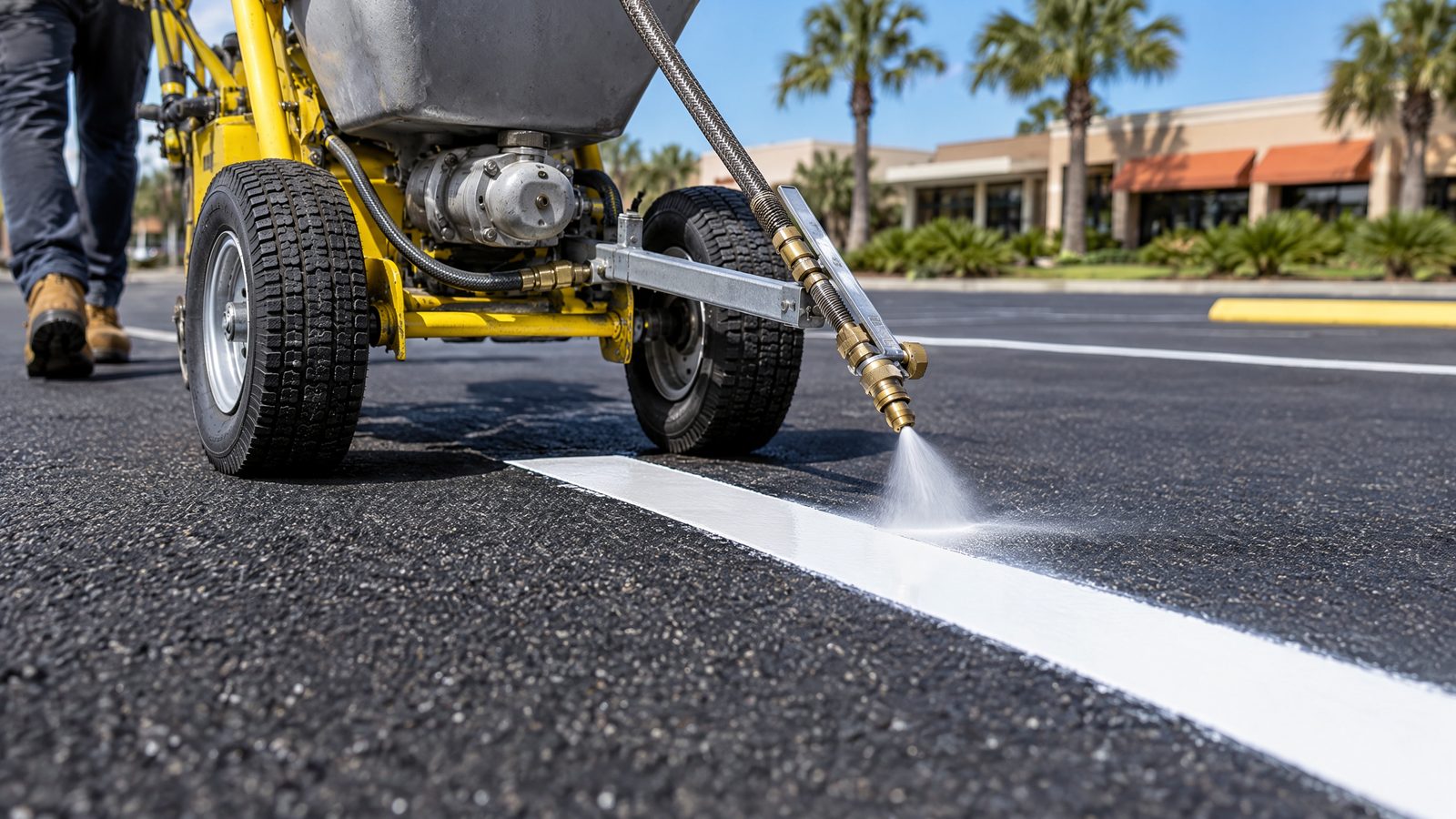
Striping is the part of a parking lot visitors notice first and owners think about last. Clear lines tell drivers where to park, which way to drive, where to stop and where they must never park. When the markings fade, people improvise, aisles clog, and spaces meant for people with disabilities or for emergency vehicles get blocked.
Striping is also one of the least expensive ways to make an older lot look maintained. Crisp white or yellow lines on a dark, recently sealed surface change how a property reads from the road, which matters for retail centers, offices, churches and apartment communities competing for tenants and customers.
This page covers the difference between restriping and a new layout, the marking requirements most owners need to plan for, how paint is chosen and applied, and how to fit striping into the rest of a pavement maintenance program.
Restriping an Existing Layout vs. Laying Out a New One
Restriping follows the lines that are already there. The crew cleans the surface, finds the old markings and repaints them in place. It is the most common job and the quickest, because the stall sizes, aisle widths and traffic flow have already been set and approved.
A new layout is a bigger decision. It comes up after full repaving or a heavy overlay that buries the old lines, when a property changes use, or when an owner wants to fit more spaces or change how traffic moves through the site. Stall dimensions, aisle widths and the number of accessible spaces all have to be worked out again, and changes to an approved site plan may need review by the city or county. In the City of Tampa, Temple Terrace, Plant City or unincorporated Hillsborough County, it is worth checking with the local building or zoning office before redesigning a lot rather than after.
Before any old layout disappears under new asphalt, it helps to photograph and measure it, or mark reference points on the curbs, so the striping crew can reproduce what was approved.
Accessible Parking Spaces
Federal accessibility rules apply to most commercial parking. The 2010 ADA Standards for Accessible Design tie the number of accessible spaces to the total number of spaces in the lot, require a share of those to be van-accessible, and call for an access aisle beside each accessible space so people using wheelchairs or lifts can get in and out. Accessible spaces belong on the shortest accessible route to an entrance.
Florida adds its own accessibility code and sign requirements on top of the federal standards, and local officials can have additional expectations. Owners should treat the exact counts, dimensions and sign details as something to confirm against the current standards for their property, not something to copy from the lot next door.
Restriping is a good moment to look at the whole accessible route, not just the paint. Faded symbols and aisles are easy to fix. A curb ramp that has settled, a sign that is missing or knocked crooked, or an accessible space placed on a slope are problems paint alone will not solve.
Fire Lanes, Arrows, Stop Bars and Curbs
Fire lanes keep a clear path for emergency vehicles, and their marking, whether painted curbs, stenciled words or striped zones, is set by the local fire authority. If a lot's fire lanes have faded, repainting them in the required color and wording is one of the more important items on a striping job.
Directional arrows, stop bars, crosswalks and one-way markings control how cars move through the site. Clear arrows prevent wrong-way driving in narrow aisles and drive-throughs, and a painted crosswalk tells drivers where to expect people walking from the lot to the door. Painted curbs, numbered or reserved spaces, loading zones and compact-car stalls round out most commercial layouts.
Paint Choice and Reflective Beads
Most parking lots are striped with waterborne traffic paint. It dries quickly, bonds well to asphalt and fresh sealcoat, and is easy to refresh. Solvent-based paints dry faster in some conditions but are being used less because of their fumes and environmental rules. Thermoplastic markings, which are melted and applied hot, are much more durable and are common on public roads and high-traffic areas, but they cost more and are usually reserved for crosswalks, stop bars and spots that wear out quickly.
Glass beads dropped onto wet paint reflect headlights back to drivers, making lines easier to see at night and in heavy rain. For lots used after dark, reflective beads on main traffic markings are worth asking about.
Color follows convention. White is used for most stall lines, yellow is common for hazards and curbs, blue marks accessible spaces, and red is often used for fire lanes, though the local fire authority has the final word on fire lane markings.
Timing With Sealcoat, Rain and Florida Sun
Striping should be the last step in any pavement project. If a lot is being sealcoated, the sealer needs to cure before lines are painted, or the paint can bleed and lose adhesion. Freshly paved asphalt also needs time before striping, though many projects place temporary markings so the lot can open sooner.
Paint needs a dry surface and a dry few hours afterward, which makes summer afternoon storms the main scheduling challenge in Tampa. Crews often stripe early in the morning, at night or on weekends when the lot is empty. Larger sites can be done in sections so part of the lot stays open.
Strong sun and heavy traffic wear lines down faster here than in milder climates. Many property managers plan on restriping on a regular cycle tied to their sealcoating schedule, with touch-ups in between for high-wear areas like entrances, drive-throughs and the stalls closest to the door.
Striping is usually the last step after parking lot paving or asphalt sealcoating, and it is often scheduled with them. Published per-square-foot ranges for sealcoating and new commercial lots are on the Tampa asphalt driveway cost guide.
What’s Included
- A walk of the lot to document the existing layout before work starts
- Cleaning of the surface so paint bonds instead of sitting on dust
- Restriping of stall lines, aisles and painted curbs
- Accessible spaces, access aisles and symbols repainted to the approved layout
- Fire lanes marked to the local fire authority's requirements
- Directional arrows, stop bars, crosswalks and stenciled words
- Reflective glass beads on traffic markings where night visibility matters
- Scheduling around business hours, sealcoat curing and afternoon storms
Why It Matters in Tampa
Tampa lots face two forces that wear markings out quickly: strong sun and heavy rain. Ultraviolet light fades paint and the asphalt beneath it, and summer storms make dry striping windows short and unpredictable. Much of Hillsborough County also mixes city and county jurisdictions, so the office to ask about a layout change depends on whether the property is inside the City of Tampa, Temple Terrace or Plant City or in unincorporated areas such as Brandon and Riverview. For retail strips along busy corridors, apartment communities and office parks, keeping lines fresh is one of the simplest ways to keep a lot safe, compliant and looking cared for.
Parking Lot Striping in Tampa — FAQ
How often should a parking lot be restriped?
It depends on traffic and sun exposure, but many owners restripe on the same cycle as sealcoating and touch up high-wear areas such as entrances and drive-throughs in between. Faded lines in accessible spaces or fire lanes should be fixed right away.
Can striping be done right after sealcoating?
No. The sealcoat needs to cure first, or the paint can bleed and peel. Striping is normally the last step of a sealcoating or paving project.
How many accessible parking spaces does my lot need?
The 2010 ADA Standards for Accessible Design base the number on the total spaces in the lot and require some to be van-accessible with an access aisle. Florida adds its own requirements, so confirm the exact count against the current standards for your property.
Who decides how fire lanes are marked?
The local fire authority sets the color, wording and location for fire lane markings. Repaint them to those requirements rather than matching whatever is on a neighboring property.
Can I change the layout to add more spaces?
Possibly, but stall sizes, aisle widths and accessible space counts all have to work, and changes to an approved site plan may need review by the city or county. Check before the old lines are removed.
Can my lot stay open during striping?
Usually. Work is often done early in the morning, at night or on weekends, and larger lots can be striped in sections so part of the parking stays available.
Other Services
- Asphalt Paving in Tampa
- Asphalt Driveways in Tampa
- Asphalt Repair in Tampa
- Asphalt Sealcoating in Tampa
- Parking Lot Paving in Tampa
- Driveway Replacement in Tampa
- Asphalt Resurfacing in Tampa
- Gravel to Asphalt Conversion in Tampa
Areas Served
- Parking Lot Striping in Hillsborough County
- Parking Lot Striping in Brandon
- Parking Lot Striping in Riverview
- Parking Lot Striping in Temple Terrace
- Parking Lot Striping in Lutz
- Parking Lot Striping in Plant City
Wondering what the job runs? See what an asphalt driveway costs in Tampa.
Free Parking Lot Striping Estimate in Tampa
Free, no-obligation estimates across Hillsborough County. Tell us about your driveway or lot.
Call (656) 208-2400