Asphalt Sealcoating in Tampa, FL
Florida sun ages asphalt faster than traffic does. A seal coat puts a thin, renewable layer between the pavement and the weather. Here is when it helps, when it does not, and how to get it applied so it lasts.
Call (656) 208-2400 for a Free Estimate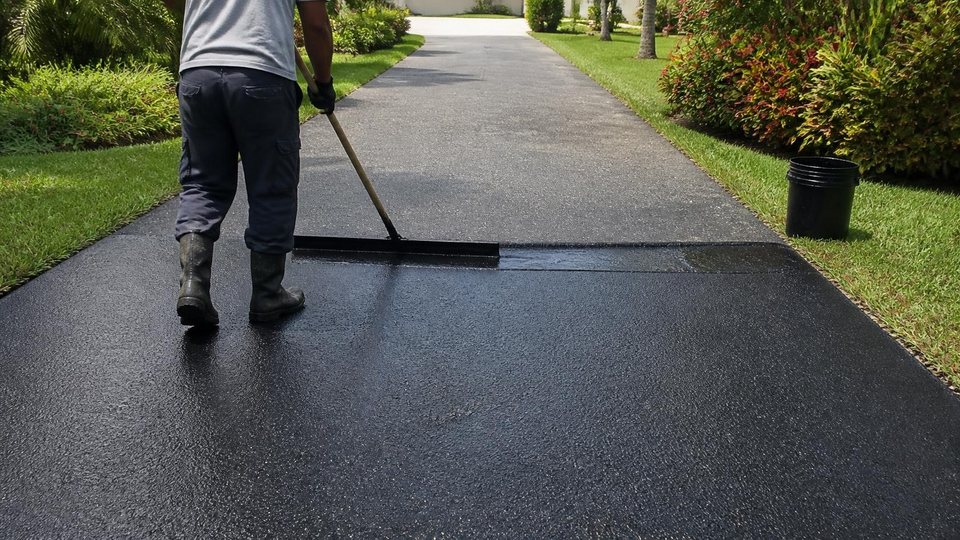
A quick clarification first, because the word sealing covers two very different trades around Tampa: this page is about sealcoating asphalt, the black pavement on driveways, private roads and parking lots. It is not about sealing brick or concrete hardscape, which uses different products, different preparation and a different kind of contractor.
Asphalt sealcoat is a liquid coating, usually a water-based emulsion blended with fine sand and additives, that is squeegeed or sprayed over the pavement in thin coats. As the water evaporates it cures into a dark, even film. That film shields the asphalt binder, the sticky petroleum glue holding the stones together, from sunlight, oxygen, water and spilled fuel or oil.
Sealcoating is maintenance for pavement that is still structurally sound. Applied at the right time and interval, it slows the aging that leads to cracking and loose stone. Applied to pavement that is already breaking up, it mostly changes the color.
What a Seal Coat Does, and What It Cannot Do
A good seal coat slows oxidation of the binder, fills the tiny voids in the surface so less water soaks in, and gives the pavement some resistance to gasoline, motor oil and other fluids that soften asphalt. It restores the deep black color, which makes striping easier to read and the whole property look cared for. A sealed surface is also smoother and easier to sweep or blow clean.
What it cannot do matters just as much. Sealcoat adds no structural strength. It will not repair alligator cracking, fill potholes, level low spots or correct drainage. It cannot bridge cracks of any real width; paint sealer over an open crack and you get a black line that splits open again within weeks. If the pavement has those problems, they need to be repaired first, or the seal coat is money spent on appearance only.
Oxidation and UV: Why Florida Asphalt Turns Gray
Freshly placed asphalt is jet black. On an unsealed Tampa driveway it can fade toward gray within the first few years, and that fading is the visible sign of a chemical change. Ultraviolet light and oxygen react with the binder at the surface. The lighter oils that keep asphalt flexible break down, and the binder that remains grows harder and more brittle.
Brittle asphalt cannot stretch and relax as it heats up in the afternoon and cools off at night, so fine shrinkage cracks begin to form. The surface also loses its grip on the small stones near the top, and they start working loose. Heat speeds the whole process along, and pavement surfaces here spend much of the year far hotter than the air temperature. With no freezing weather to worry about, sun and water are the two forces doing most of the damage to Florida asphalt.
A seal coat takes that exposure in place of the pavement. The coating itself wears away under sun and tires, but it is designed to be renewed, while the asphalt beneath it is not. That is the entire value of sealcoating: sacrificing a cheap, replaceable layer to protect an expensive one.
Coal-Tar, Asphalt-Emulsion and Acrylic Sealers Compared
Coal-tar emulsion sealers are made from a byproduct of producing coke for steelmaking. They have a long track record on commercial lots because they resist gasoline, oil and UV very well. The trade-offs are a strong odor, skin and eye irritation during application, and high levels of polycyclic aromatic hydrocarbons, which is why some states and cities elsewhere in the country have restricted coal-tar sealers and some manufacturers have moved away from them. Ask directly whether a product is coal-tar based.
Asphalt-emulsion sealers are made from asphalt cement, the same family of material as the pavement itself. They have less odor and far lower levels of those hydrocarbons, and they are pleasant to work with around homes. They generally offer less resistance to fuel and oil than coal tar, and cheaper blends can fade more quickly under strong sun. Quality varies widely from one manufacturer to the next.
Acrylic and other polymer-based sealers contain neither coal tar nor asphalt. They hold color well under UV, can be tinted, and cure to a tough film, which makes them popular where appearance matters or where coal tar is unwanted. They typically cost more per gallon than the other two types.
Whatever the type, how the sealer is mixed matters as much as what it is. Manufacturers specify how much water, sand and additive can be blended in. Sealer that has been watered down past that spec goes on easily and looks fine on day one, then wears off in a fraction of the expected time. Ask for the product name, the mix ratio and the number of coats in writing.
Preparation Decides Whether the Coat Sticks
Sealer adheres to clean asphalt and peels off of everything else. The surface should be swept and blown clean of dirt, loose stone, leaves and grass clippings. Sandy soil washes and blows onto pavement edges here constantly, and a strip of sand along the edge is one of the most common reasons a seal coat flakes off there first. Grass and weeds growing over the edges should be trimmed back so the coating reaches the actual edge of the asphalt.
Oil and fuel stains need attention before any sealer goes down. Loose residue is scraped and cleaned, and an oil-spot primer is applied so the coating can grip over the stain. Skip that step and the sealer lifts off in a patch right where the car drips. Shaded areas under trees can grow mildew or algae in Tampa humidity, and that growth has to be cleaned off as well.
Cracks wider than hairline are filled beforehand and allowed to set. Along concrete sidewalks, garage slabs, curbs and landscape borders, the edges are cut in by brush or protected so sealer ends cleanly on the asphalt and does not stain the concrete.
Application itself works best as two thin coats rather than one heavy one. The first coat is often squeegeed so it is worked into the surface texture, and the second is squeegeed or sprayed once the first has dried. Thin coats cure more completely and wear more evenly than a single thick layer.
Sealcoating Between Summer Afternoon Storms
Sealer needs three things to cure properly: a dry surface, temperatures within the range printed on the product label, and enough rain-free hours for the water in the emulsion to evaporate. From June through September in Tampa, that third requirement is the hard one. Mornings often start clear, clouds build by midday, and a thunderstorm rolls through in the afternoon.
A shower on uncured sealer can wash it off the pavement and into the gutter, leave streaks or a patchy, uneven finish, and force a second application. The practical approach in summer is an early start, close attention to radar, and a plan that gives the final coat hours of dry time before the storms usually build. On days with a high chance of early rain, rescheduling is better than gambling.
Heat and humidity create their own problems. A very hot surface can make sealer skin over too quickly on top while staying soft underneath, and heavy humidity slows the evaporation that cures it. The drier, milder months from roughly October through May are the easiest window for sealcoating in this area, especially for larger areas that cannot be finished in a single morning.
On the property owner side, turn off irrigation the day of the job and the day after, because sprinkler heads that hit fresh sealer will pit and streak it. Move vehicles off the pavement before the work starts, keep pets and foot traffic off, and plan on 24 to 48 hours before driving on the surface again.
How Often to Reseal, and the Problem With Over-Sealing
On sound asphalt, a seal coat every 2 to 3 years is the trade standard. A lightly used residential driveway can often go toward the longer end of that range. Drive lanes, entrances and turning areas on busier pavement wear through faster than parking stalls or the edges of a driveway. Newly placed asphalt should not be sealed right away; a common recommendation is to let it cure for several months first so the surface oils can settle out.
The simplest test for timing is to look closely at the surface. If the coating is still dark and intact and the stone texture is not showing through, it is too soon. When the color has faded and you can see the aggregate standing out again, especially in the tire paths, it is time.
More is not better. Sealing every year builds up a thick film that cannot flex with the asphalt beneath it. That buildup cracks into a fine map pattern, peels off in flakes and sheets, and can become slick when wet, particularly in areas where tires never wear it down. Stripping away that excess is harder than it was to apply. An annual sealcoating schedule is usually a sales habit rather than something the pavement needs.
Sealcoating a home driveway and sealcoating a large commercial lot are priced very differently, and the published ranges for both are on the Tampa asphalt driveway cost guide. If your pavement already has potholes or spreading cracks, start with asphalt repair, because no sealer will hold a failing surface together.
What’s Included
- A walk-around to confirm the asphalt is sound enough to benefit from a seal coat
- Sweeping, blowing and edge trimming to clear sand, dirt, leaves and grass
- Oil and fuel stain cleanup with a primer so the sealer grips over the spot
- Filling of cracks wide enough to need it before any coating goes down
- A named sealer product and mix ratio, with the coal-tar, asphalt-emulsion and acrylic options explained
- Clean cut-in along garage slabs, sidewalks, curbs and landscape borders
- Two thin coats applied by squeegee or spray instead of one heavy coat
- Scheduling around the forecast, with the area taped off while it cures
- Clear instructions on when to drive, park and run irrigation again
Why It Matters in Tampa
Tampa is hard on unprotected asphalt. The sun is intense for most of the year, the hot season is long, and pavement surfaces spend months far above the air temperature, which is exactly the recipe for fast oxidation. At the same time, the rainy season brings near-daily afternoon storms from June through September, so the summer weather that ages asphalt fastest is also the weather that makes sealcoating hardest to schedule. Humidity slows curing, sandy soil drifts onto pavement edges, and shaded driveways under live oaks collect leaf litter and grow mildew that must be cleaned off before any sealer will stick. Most yards in the area are irrigated, so sprinkler timing becomes part of the plan. For many Hillsborough County property owners, the best approach is to fill cracks and seal during the drier months so the pavement goes into storm season protected.
Asphalt Sealcoating in Tampa — FAQ
How long after sealcoating can I drive on my driveway?
Plan on 24 to 48 hours before driving on it. The surface may feel dry to the touch within a few hours, but the coating underneath is still curing, and tires turning on soft sealer leave scuffs and tracking marks that do not come out. Cooler temperatures, shade and high humidity all push toward the longer end of that range. Foot traffic is usually fine sooner than cars. When in doubt, wait the extra day, and avoid turning the steering wheel while parked on it for the first several days.
Is coal-tar sealer better than asphalt-based sealer?
It depends on what you are protecting against. Coal tar holds up better to gasoline and oil drips, which is why it has been common on commercial lots and at gas stations. Asphalt-based sealers are lower in odor and in the hydrocarbons that have drawn regulatory attention to coal tar in other parts of the country, and they are generally the easier choice around homes, pools, gardens and children. For a typical Tampa driveway without heavy fuel spills, a quality asphalt-emulsion or acrylic product applied correctly does the job well.
How often should an asphalt driveway be sealcoated in Florida?
Every 2 to 3 years is the usual interval on a driveway in good shape. The strong Florida sun wears coatings faster than in milder climates, so a driveway in full sun all day may need attention closer to the two-year mark, while a shaded one can often wait longer. The best guide is the surface itself: reseal when the color has faded and the stone texture shows through. Resist annual resealing, which builds up a thick layer that eventually cracks and peels.
Can sealcoating be done during the rainy season in Tampa?
Yes, but it takes planning. Summer storms tend to build in the afternoon, so work starts early, and the job should be timed so the final coat has several dry hours before rain is likely. If the forecast calls for morning showers or an unsettled day, rescheduling is the right call, because rain on fresh sealer can wash it away or leave streaks. Many owners prefer to schedule sealcoating during the drier months from fall through spring, when the weather is more predictable.
Does sealcoating fill cracks in asphalt?
Only the very finest hairline cracks. Sealcoat is a thin film, and over any crack with real width it simply sags into the opening and splits apart again as the pavement moves. Those cracks need to be cleaned out and filled with a dedicated crack filler first, and given time to set, before the seal coat goes over the top. On pavement with widespread cracking, soft spots or potholes, the repairs come first and sealcoating comes last.
How soon can new asphalt be sealcoated?
Not right away. Fresh asphalt still has light oils working their way out of the surface, and sealing too early can trap them and keep the pavement soft. A common trade recommendation is to wait several months after installation before the first coat, and some contractors prefer to let a new driveway go through a full summer first. In the meantime, avoid parking in exactly the same spot every day and keep sharp point loads off the new surface.
Other Services
Areas We Serve
- Asphalt Sealcoating in Hillsborough County
- Asphalt Sealcoating in Brandon
- Asphalt Sealcoating in Riverview
- Asphalt Sealcoating in Temple Terrace
- Asphalt Sealcoating in Lutz
- Asphalt Sealcoating in Plant City
Wondering what the job runs? See what an asphalt driveway costs in Tampa.
Free Asphalt Sealcoating Estimate in Tampa
Free, no-obligation estimates across Hillsborough County. Tell us about your driveway or lot.
Call (656) 208-2400