Asphalt Repair in Tampa, FL
Cracks, potholes, soft spots and puddles that never drain each point to a different problem underneath. Learn to read the damage on your driveway or lot, and match it to the repair that will actually hold.
Call (656) 208-2400 for a Free Estimate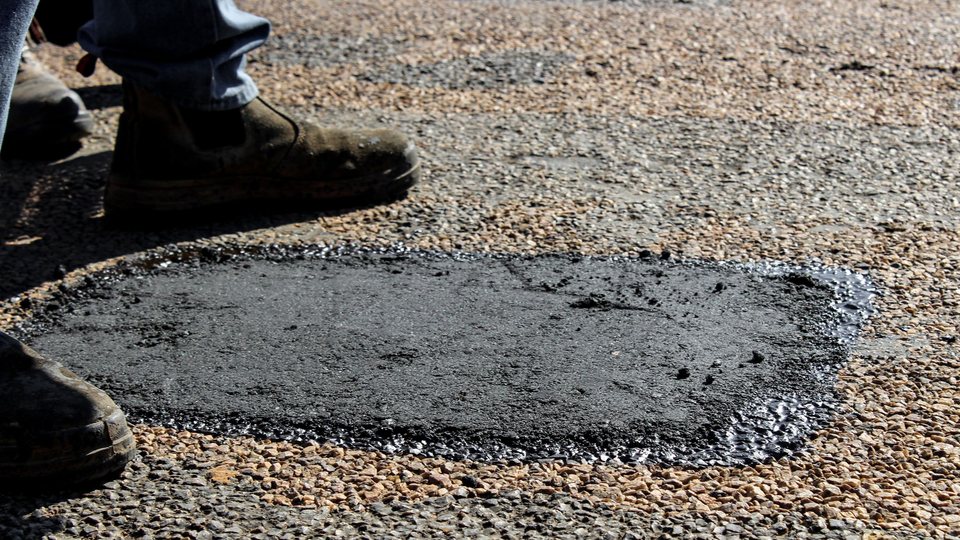
Asphalt in Hillsborough County rarely fails overnight. The sun hardens the surface, a crack lets in a little water, and the sandy base underneath starts to shift. By the time a pothole opens, the pavement has usually been sending warning signs for a season or two. Good repair work is about reading those signs early and fixing the cause, not just filling whatever hole showed up this week.
The main repair methods are not interchangeable. Crack filling seals an opening in the surface. A surface patch replaces the top layer over a base that is still sound. A full-depth patch cuts out everything down to the soil and rebuilds it. Put a light fix on a deep problem and the same spot breaks open again after the next wet summer. Put a heavy fix on a shallow problem and you have paid for excavation you did not need.
What follows is a plain guide to the damage you are likely to see on a Tampa driveway or parking area, what usually causes each kind, and the point where patching stops being money well spent.
Reading the Cracks: Alligator, Block, Edge and Reflective
Alligator cracking, also called fatigue cracking, is a web of connected cracks that breaks the surface into small, many-sided pieces that look like reptile skin. It shows up in wheel paths, at the spot where a car parks every night, or where trucks turn. It means the pavement is flexing more than it can handle, almost always because the base below is wet, weak or too thin for the load. Filling the individual cracks does very little. The cracked area generally has to be cut out and rebuilt from the base up.
Block cracking divides the surface into large, roughly rectangular pieces, and it often covers areas that barely see traffic, like the far side of a driveway or the back row of a lot. The cause is age: the asphalt binder shrinks and stiffens as it oxidizes, and in Florida that is driven by sun and heat rather than cold. Because the base is usually still sound, block cracking responds well to crack filling followed by regular maintenance.
Edge cracking runs parallel to the side of the pavement, usually within a foot or two of the edge, and it tends to crumble as it progresses. The edge has lost its support. Soil beside it washed out, water sat along it, or tires kept dropping off the side. Filling those cracks without rebuilding the edge and restoring soil against it only postpones the next break.
Reflective cracking appears when asphalt was placed over an older surface, such as an old concrete slab or a previous layer of worn asphalt. The joints and cracks in the layer below keep moving, and they telegraph straight up through the new surface, often in neat lines that match the old slab joints. These cracks can be sealed to keep water out, but expect them to return, because the movement underneath does not stop.
Potholes, Raveling and the Water Behind Them
Up north, potholes are blamed on freezing and thawing. Tampa does not freeze, so the culprit here is saturation. Water gets through a crack, soaks the base, and every passing tire pumps a little more wet sand and fine material out from under the surface. Once the asphalt above has lost its support, it breaks away in chunks. Summer afternoon storms can keep a base wet for weeks at a stretch, and in low areas with a high water table it may never fully dry, which is why potholes seem to bloom in August rather than January.
A pothole is a symptom, so the repair has to go below it. Removing only the loose chunks and dropping fresh material into the hole leaves the soft base in place, and the new patch sinks or pops out. A lasting pothole repair squares off the hole, digs out the wet material, rebuilds and compacts the base, and then places hot asphalt in layers.
Raveling is the slow loss of the surface itself. The texture turns rough like coarse sandpaper, and loose stones collect along the edges, in the gutter or on the garage floor. It happens when the binder has oxidized and can no longer hold the aggregate, and it can also point to a mix that was poorly compacted when it was placed. Light raveling is a maintenance issue that a seal coat can slow. Heavy raveling across a whole surface means the wearing layer is near the end of its life, and no amount of spot patching will stop a surface that is shedding everywhere at once.
Depressions, Birdbaths and Sinkhole-Related Settlement
A birdbath is a shallow low spot that holds water after rain. Some start as a construction flaw, where the surface was built without enough slope or the base was compacted unevenly. Others develop over time as a soft area of base slowly settles. Either way, standing water is not harmless. It keeps the base underneath soaked, and the edges of a birdbath are where cracks and potholes tend to start. Walk your pavement the morning after a heavy storm and note any spot still holding water.
Shallow depressions over a firm base can often be leveled with a thin patch or by cutting out and re-placing the surface. If the ground under the low spot is soft when probed, the base has to come out and be rebuilt, or the new surface will settle right back into the same dip.
West-central Florida sits on limestone that can dissolve over time, and sandy soil can slowly slip down into voids below. Most dips in a driveway have ordinary causes, like a poorly compacted utility trench, a buried tree stump rotting away, or a broken irrigation or drain pipe washing sand out from under the pavement. But a depression that keeps growing, a roughly circular sag, cracks forming in a ring, or a dip that appears suddenly deserves a different response. Have a geotechnical engineer or a sinkhole specialist evaluate it before anyone patches over it. Placing fresh asphalt over an active void only hides the warning sign.
Crack Filling vs. Patching vs. Full-Depth Repair
Crack filling is the lightest repair. Cracks wider than about a quarter inch are cleaned out with air or a wire brush, any weeds are pulled, and a filler is placed into the opening. Hot-applied rubberized filler stays flexible and generally outlasts cold pour-in products. Hairline cracks are usually too narrow to fill and are handled by maintenance coatings instead. Crack filling keeps water out of the base, which is the whole point, but it adds no strength to pavement that is already failing.
A surface patch removes the top layer of damaged asphalt by cutting or milling and replaces it with new hot mix that is compacted flush with the surrounding surface. It suits raveled areas, shallow surface breakup and small depressions where the base below is still firm. Infrared repair is a related method that heats the existing asphalt in place, reworks it with fresh material and compacts it, which leaves a nearly seamless joint. Neither method fixes a base problem.
A full-depth patch is the right answer for alligator cracking and for potholes caused by a failed base. The area is saw-cut in a clean rectangle that extends past the visible damage into sound pavement. The asphalt and wet or contaminated base are dug out, the base is rebuilt and compacted in lifts, and hot asphalt goes back in layers and is rolled tight. The seams are then sealed so water cannot follow the joint back down. It takes more time and material than the lighter methods, and it is the only one of the three that actually replaces the failed structure.
Bagged cold patch has a place, but that place is temporary. It can make a hole safe to drive over until a proper repair is scheduled. It does not compact or adhere the way hot mix does, and in summer heat it tends to shove, rut and loosen within months.
Fixing the Water Source So the Repair Lasts
Most repeat failures on sandy ground trace back to water that keeps arriving at the same spot. A downspout that dumps roof runoff onto the driveway edge, irrigation heads that spray the pavement every morning, a lawn graded so storm water runs under the asphalt instead of off it, or a clogged inlet on a parking area can each undo a good patch in a single rainy season.
Before any patch goes in, it is worth asking where the water came from. Extending a downspout, redirecting a sprinkler head, restoring soil along an edge or clearing a drain is often cheap compared with digging out the same section again. A repair plan that names the water source along with the damage is a sign the problem was actually diagnosed.
When Repair Stops Making Sense
Repair is the right call when damage is limited to specific areas and the rest of the surface is sound. It stops making sense when the damage is no longer a few spots but a large share of the surface. Signs you have reached that point include alligator cracking spreading across the main traffic areas, patches being placed next to or on top of older patches, raveling over the entire surface, and low spots caused by grading that was built wrong from the start.
At that stage there are two broader options. An overlay places a new layer of asphalt over the existing surface, but it only works when the base below is still solid; laid over widespread base failure, the old cracks come right back through. Full replacement removes the old pavement, corrects the base and drainage, and starts over. The details of new construction and resurfacing are covered on the asphalt paving service page. The honest answer from a site visit may be that the money set aside for another round of patches is better put toward the larger job.
Repairs are priced by the linear foot of crack and the square foot of patch. Those published ranges, plus what an overlay or full replacement runs once patching no longer pays, are laid out in the Tampa asphalt driveway cost guide. After the repairs are done, asphalt sealcoating is what slows the next round of cracking.
What’s Included
- On-site diagnosis of each damaged area: crack type, pothole cause, settlement or drainage
- Cleaning cracks wider than about a quarter inch and filling them with a flexible filler
- Saw-cut, square-edged patches that extend past the damage into sound pavement
- Removal of wet or contaminated base and recompaction in lifts on full-depth repairs
- Hot-mix asphalt placed in layers and rolled flush with the surrounding surface
- Sealed patch seams so water cannot follow the joint back into the base
- Edge rebuilding and restored soil support along crumbling pavement edges
- Leveling of birdbaths and low spots that hold water after storms
- A clear note on the water source feeding the damage, and on when overlay or replacement is the better spend
Why It Matters in Tampa
Tampa asphalt deals with a different set of enemies than pavement in cold climates. There is no freeze-thaw cycle here, so damage is driven by water and sun. Roughly fifty inches of rain a year falls on the area, much of it in afternoon thunderstorms from June through September, and hurricane season can add days of heavy rain on top of that. Much of Hillsborough County is low and flat, with sandy soil over limestone and a water table close to the surface, so a base that gets wet often stays wet. Mature live oaks in older neighborhoods lift and crack pavement with their roots. That combination is why a crack left open in spring so often becomes a pothole by late summer. One practical note: if the pothole is in the public street rather than on your property, it is the responsibility of the City of Tampa or Hillsborough County, depending on where you live, and should be reported to them.
Asphalt Repair in Tampa — FAQ
How do I know if a crack in my asphalt driveway is serious?
Look at the pattern and the surface around it. A single straight crack on a firm, level surface is usually an aging crack that can be filled. A web of small interconnected cracks, cracks with sunken or pushed-up edges, or a crack where the pavement feels soft underfoot all point to base failure. Width matters too: once a crack is wider than about a quarter inch, water gets into the base readily. Any crack that keeps getting wider from one rainy season to the next is telling you the ground below is moving.
Can I fix a pothole with cold patch from the hardware store?
You can make it safer for a while, but it is not a permanent repair. Bagged cold patch never cures as hard as hot asphalt, and it cannot be compacted as tightly with hand tools, so traffic pushes it out of the hole. More importantly, it goes on top of whatever wet, loose base caused the pothole in the first place. If you use it, clean out loose debris and water first, overfill slightly and tamp it hard, and treat it as a placeholder until the base can be dug out and rebuilt.
What causes alligator cracking on asphalt?
Alligator cracking is a structural failure. The asphalt flexes a little every time a vehicle passes, and when the support below is inadequate, that flexing eventually fractures the surface into small connected pieces. The usual reasons are a base that has been soaked by water, a base or asphalt layer that was too thin for the vehicles using it, or loads heavier than the pavement was built for, such as delivery trucks or a parked motor home. Because the problem is below the surface, the cracked section needs to be removed and rebuilt rather than sealed.
Is a dip in my driveway a sinkhole?
Probably not, but it is worth ruling out. Most driveway dips come from settling fill, a utility trench that was not compacted, rotting roots or stumps, or a leaking pipe washing sand away. Warning signs that point toward a deeper cause include a depression that grows noticeably over weeks, a circular shape, cracks forming in rings, doors or windows in the house starting to stick, or cracks appearing in nearby walls. If you see those, stop and have a geotechnical engineer or sinkhole specialist look at it before any asphalt work is done.
What is the difference between crack sealing and crack filling?
The terms get used loosely, but in the trade they describe different jobs. Crack sealing targets working cracks that open and close as the pavement heats and cools; the crack is often routed to create a clean reservoir, and a flexible sealant is placed so it can stretch with that movement. Crack filling targets cracks that move very little, and the material is placed to plug the opening and keep water out. Sealing takes more prep and material per foot and generally lasts longer on cracks that move.
Why do potholes seem to appear more in summer in Tampa?
Because summer is the wet season. Daily afternoon storms put water on the pavement almost every day for months, and water that gets through cracks keeps the sandy base soaked. Summer heat also softens the asphalt, which makes it easier for traffic to push and break the surface over a weak spot. Put those together and a crack that looked minor in April can open into a pothole by August. Filling cracks during the drier months, before the storms arrive, is one of the most effective things you can do to prevent that.
Other Services
- Asphalt Paving in Tampa
- Asphalt Driveways in Tampa
- Asphalt Sealcoating in Tampa
- Parking Lot Paving in Tampa
Areas We Serve
- Asphalt Repair in Hillsborough County
- Asphalt Repair in Brandon
- Asphalt Repair in Riverview
- Asphalt Repair in Temple Terrace
- Asphalt Repair in Lutz
- Asphalt Repair in Plant City
Wondering what the job runs? See what an asphalt driveway costs in Tampa.
Free Asphalt Repair Estimate in Tampa
Free, no-obligation estimates across Hillsborough County. Tell us about your driveway or lot.
Call (656) 208-2400