Asphalt Paving in Tampa, FL
Asphalt paving in Tampa is decided below the surface. Sandy ground, a high water table and summer downpours settle how long new asphalt lasts well before the first load of hot mix arrives, so this page walks the trade from raw ground to the last roller pass.
Call (656) 208-2400 for a Free Estimate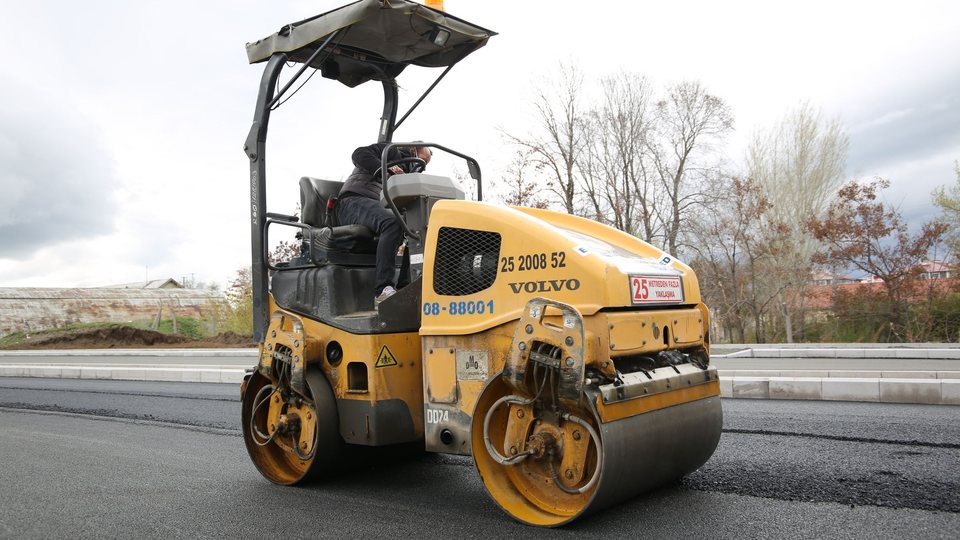
Most people picture asphalt paving as the moment black mix spreads out behind a machine. That part takes hours. What comes before it, clearing, cutting grade, compacting the subgrade and building a base, takes longer and matters more. Asphalt is a flexible surface. It carries weight only as well as the layers beneath it spread that weight into the ground, and no amount of care on top makes up for a weak foundation.
Hillsborough County makes those lower layers harder to get right than they look. Much of the county sits on fine sand over limestone, with groundwater close to the surface and land so flat that water has no obvious place to go. Sand compacts well at the right moisture and shifts when it is too dry or too wet. Organic soil left under a base keeps settling for years. A site that feels firm in April can turn spongy after a week of August storms.
The work covered here is the broad trade: new asphalt on ground that has never carried it, overlays and full-depth rebuilds of worn surfaces, long access roads and private lanes, and the shared drives that churches, schools and homeowner associations maintain. Homeowners focused on a single driveway will find layout, street aprons and HOA approval covered on the asphalt driveways page, and commercial lots with striping and truck traffic have a page of their own.
Starting on Raw Ground
New asphalt on raw ground begins with what has to come out. Grass, roots, topsoil and any dark organic muck are stripped away until the excavation reaches mineral soil that will not decompose. In low parts of the county that can mean digging deeper than anyone planned, because a pocket of peat or old buried fill under a future drive gives no sign of itself from the surface. Leaving it in place is one of the most common reasons a brand-new surface develops a dip within its first few years.
Next comes layout: finished elevations, the path water will take, and how the new asphalt ties into whatever already exists, whether that is a road edge, a garage slab, a sidewalk or a building entrance. Those tie-in points are fixed, so everything between them is graded to fit. A careful contractor sets grade stakes or uses laser or GPS-guided equipment and confirms the fall before any stone is delivered, because correcting drainage after the asphalt is down means tearing it back out.
Grading and Compaction on Sandy Tampa Soil
Grading shapes the subgrade so every part of the finished surface sheds water. On flat Tampa sites the margin is thin; ground that looks level to the eye still needs a deliberate slope toward a swale, an inlet or open lawn. Whether a lane is crowned to drop toward both edges, or a wide area is cross-sloped to one side, gets decided here in the dirt, not later in the asphalt.
Compaction is where sandy soil earns its reputation. Dry sand runs like sugar and will not lock together, while saturated sand pumps and goes soft under a roller. Dry subgrade gets watered and wet subgrade gets time to drain, then the soil is compacted in layers with vibratory rollers or plate compactors. On larger jobs a loaded truck is driven slowly across the grade in a proof roll, and any spot that ruts or flexes is dug out and rebuilt. Where the water table sits high, raising the grade or adding fabric is safer than trusting ground that never fully dries.
One warning sign deserves a pause: a soft spot that keeps coming back, or ground that drops in a rounded pattern. West-central Florida's limestone can hold voids that no roller will fix, and that ground should be evaluated before anything is built over it.
What Goes Under the Asphalt: Base Materials
The base is a layer of crushed aggregate between the soil and the asphalt. In this part of Florida it is usually crushed limestone or recycled crushed concrete, and both compact into a dense, interlocking mat that spreads wheel loads across the soft sand below. Good base stone arrives graded, meaning it has a mix of particle sizes from fines up to larger pieces so the small material fills the gaps between the big. Clean stone of a single size drains nicely but rolls and shifts under load.
For a typical residential section, the base is commonly 4 to 6 inches of compacted crushed stone under 2 to 3 inches of compacted asphalt. Roads that carry delivery trucks, buses or equipment need more of both, and that heavier section should be sized to the traffic rather than guessed. Geotextile fabric goes over subgrade that stays soft or damp so base stone does not slowly push down into the sand. When bids arrive, look for the base material and its compacted thickness in writing. It is the one layer nobody can inspect once it is buried.
Hot-Mix Placement and Rolling
Hot-mix asphalt is stone and liquid asphalt binder heated and blended at a plant, then hauled to the site in covered trucks. From the moment it leaves the plant it is losing heat, and it has to be spread and compacted while it is still workable. A laydown machine meters the mix through a heated screed that sets the thickness and leaves a smooth first surface. Before placement, a tack coat of asphalt emulsion is sprayed on existing asphalt and along cut edges so the layers bond instead of sliding apart.
Rolling follows right behind. A heavy breakdown roller does most of the densifying while the mix is hottest, an intermediate pass tightens it further, and a finish roller erases marks. Joints between passes are where poorly placed asphalt fails first, so they need to be tight, overlapped correctly and rolled promptly. Hand work around drains, curbs and corners should reach the same density as the open areas. Rain matters as well. Water on the base or on fresh mix chills it before it compacts, which is why summer work in Tampa starts early and a sensible foreman shuts down when an afternoon storm cell is minutes out.
Overlay or Full-Depth Reconstruction
An overlay places a new layer of hot mix over existing asphalt. It works when the old surface is worn, oxidized or rough but the base underneath still carries traffic without soft areas. The old surface is cleaned, damaged spots are patched first, and edges along curbs, doorways and gutters are milled down so the new layer finishes flush instead of forming a lip that traps water.
An overlay cannot fix what lies beneath it. Cracks in the old asphalt tend to work their way up through a new layer, and a base that has already failed will fail the overlay the same way, only faster. When large areas are broken into pieces, rutted or sinking, full-depth reconstruction removes the asphalt, repairs or replaces the base and builds a new section. On long roads there is a middle route called full-depth reclamation, where the old asphalt and base are ground together in place, stabilized, regraded and topped with fresh hot mix. The right call comes from test cuts or cores that show what is actually down there, not from a glance at the surface. Judging individual damage spot by spot is the subject of the asphalt repair page.
Access Roads and Private Lanes
A long private lane, a road back to a barn or equipment yard, or a shared drive serving several homes behaves more like a small road than a driveway. Length magnifies every decision. Drainage has to be handled along the entire run, not just at each end, and a lane with even a slight sag will hold a sheet of water across it after a storm.
A lane built to last gets a crown or cross slope, stable shoulders, and swales or cross drains that move water off the surface quickly. The asphalt edge needs support, because an edge hanging over loose sand snaps off under tires that drift to the side, so shoulders are backfilled and compacted as part of the job. Wider pull-outs let two vehicles pass, and a turnaround at the far end keeps delivery trucks from backing the whole distance. If fuel trucks, well drillers, moving vans or farm equipment will use the lane, the base and asphalt should be sized for them rather than for the family car.
Church, School and HOA Drives
Community properties add scheduling and group decisions to the engineering. A church loop may need to reopen for weekend services. A school entrance has drop-off lines, buses and a calendar with a short summer break. A homeowner association's private streets serve residents who still have to leave for work every morning. The job gets phased around those limits, often one lane or one section at a time, with notice posted well ahead of each closure.
Boards usually need something they can vote on: a written scope for each street or area, a plain explanation of why one section can take an overlay while another needs reconstruction, and a sense of how the work fits a reserve budget over several years. A scope broken down by area lets a board fund the worst streets first and plan the rest. Where a community drive opens into a striped lot with accessible spaces, that portion falls under parking lot paving.
Before comparing bids, read the Tampa asphalt cost guide to see what moves the price of new asphalt and what published ranges leave out.
What’s Included
- Site walk to set finished grades, tie-in points and drainage paths
- Clearing and stripping of turf, roots and organic soil down to firm ground
- Subgrade grading, moisture control and compaction, with proof rolling on larger areas
- Geotextile fabric over soft or wet subgrade where the ground calls for it
- Crushed limestone or recycled concrete base, compacted in layers
- Tack coat on existing asphalt, cut edges and joints
- Hot-mix placement and rolling while the mix is still workable
- Milling at curbs, doorways and gutters ahead of an overlay
- Shoulder backfill and edge support along lanes and long drives
Why It Matters in Tampa
Tampa's ground and weather punish shortcuts in asphalt paving in ways a colder climate would not. There is no freeze-thaw cycle here, so the damage comes from water: sand subgrade that softens when the water table rises, roughly fifty inches of rain a year falling mostly from June through September, and flat developments where runoff reaches a retention pond only if the grade sends it there. Add summer heat that keeps fresh asphalt soft and live oak roots that heave edges, and an asphalt job in Hillsborough County succeeds or fails on stripping, base and compaction long before anyone judges the finished surface.
Asphalt Paving in Tampa — FAQ
Can asphalt be laid directly on sand?
Not if it is expected to last. Asphalt relies on what sits beneath it to carry weight. Placed straight on Florida sand, it flexes under every tire, breaks into small interconnected pieces and ruts, especially in summer when the asphalt is soft and after heavy rain when the sand is saturated. A compacted crushed-stone base between the sand and the asphalt spreads that load out. Thinning or skipping the base is the most common shortcut in a low bid, and it cannot be corrected later without removing the asphalt.
What does milling mean on an asphalt paving bid?
Milling is grinding off the top of existing asphalt with a machine that has a spinning drum of carbide teeth. It is used before an overlay so the new surface meets curbs, gutters, thresholds and drains at the right height, and to remove a deteriorated top layer without disturbing a sound base. The ground-up material, called millings or reclaimed asphalt, goes back to the plant for recycling or can be compacted as a surface on a farm road or overflow parking area.
Can asphalt be paved in the rain or right after a storm?
Hot mix should not go down in active rain or onto standing water. Water pulls heat out of the mix before the rollers can compact it, and it keeps the tack coat from sticking. After a storm the question is the base and subgrade. Sandy ground often drains fast enough to work later the same day or the next, but a saturated base that pumps under a loaded truck needs to dry out first. Pushing ahead on a wet base traps moisture that weakens the surface from below.
Should a long private lane be asphalt or gravel?
Gravel costs less to put down, but in Tampa rains it washes out on slopes, develops potholes and washboard ripples, and needs regrading and new stone on a regular basis. Loose stone also tracks into garages and onto the road. Asphalt sheds water, stays smooth and needs far less day-to-day attention, provided its edges are supported. An existing gravel lane that has been driven on for years is often a head start, since the compacted stone can be regraded, topped up and used as the base for new asphalt.
Is it normal for new asphalt to have scuffs and a rough texture?
Some marking is normal. Fresh asphalt stays soft for a while in Florida heat, and tires turned in place or a vehicle braking hard can scuff it; most of those marks fade as the surface cures and weathers. Faint roller lines usually disappear too. What is not normal is a patch of loose, open, rocky texture where large stones cluster without fine material around them. That is segregation from placement, it lets water in, and it is worth raising with the contractor before final payment.
How is new asphalt paving different from resurfacing?
New asphalt paving builds the whole structure: clearing, grading and compacting the subgrade, installing and compacting a base, then placing hot mix. Resurfacing, or an overlay, reuses an existing structure and adds a new wearing layer on top. That makes resurfacing faster and less disruptive, but it depends entirely on the old base still being sound. On raw ground there is nothing to reuse, so every layer is new. On an old surface, the contractor should explain which approach the site supports and what evidence led to that choice.
Other Services
- Asphalt Driveways in Tampa
- Asphalt Repair in Tampa
- Asphalt Sealcoating in Tampa
- Parking Lot Paving in Tampa
Areas We Serve
- Asphalt Paving in Hillsborough County
- Asphalt Paving in Brandon
- Asphalt Paving in Riverview
- Asphalt Paving in Temple Terrace
- Asphalt Paving in Lutz
- Asphalt Paving in Plant City
Wondering what the job runs? See what an asphalt driveway costs in Tampa.
Free Asphalt Paving Estimate in Tampa
Free, no-obligation estimates across Hillsborough County. Tell us about your driveway or lot.
Call (656) 208-2400