Asphalt Paving in Temple Terrace, FL
Temple Terrace is a city of established homes and big shade trees, and both leave their mark on asphalt. Roots lift the surface, shade keeps it damp, and old bases finally give out. Call to have your driveway or small lot looked at with those problems in mind.
Call (656) 208-2400 for a Free Quote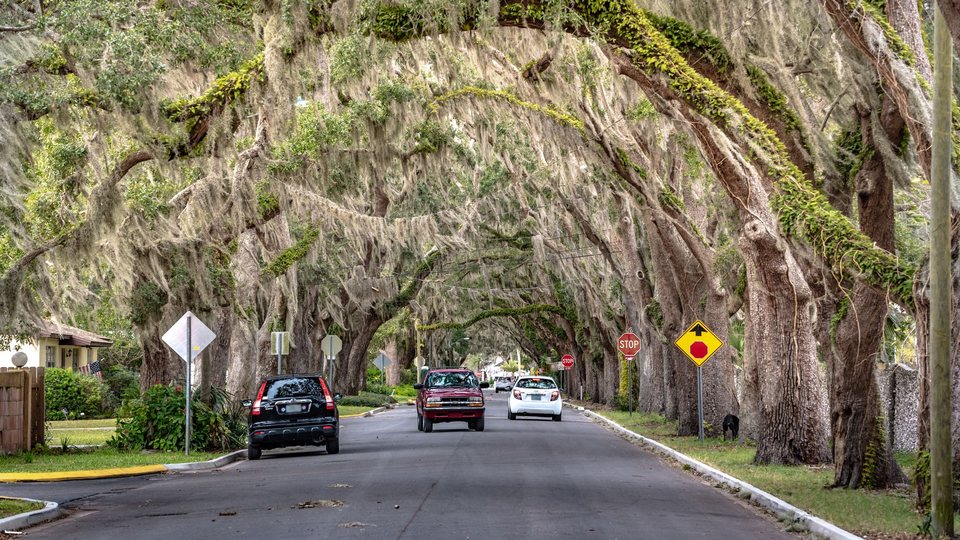
Temple Terrace is its own incorporated city northeast of Tampa, with its own city government, so work on a driveway or parking area inside the city limits is normally a conversation with the city rather than with Hillsborough County. Before anyone cuts into the apron where your drive meets the street, confirm with the City of Temple Terrace what approval that work needs. If your street has a homeowners association, check whether it wants to review the change as well.
What sets this city apart for asphalt work is age and shade. Plenty of homes here have been standing for decades, and many lots carry oaks whose limbs reach clear across the driveway. An old driveway in Temple Terrace rarely wears out from car traffic alone. It fails because roots have shoved up through a thin base, because the shaded half never quite dries after an afternoon storm, or because the stone put down underneath it long ago was never much of a foundation in the first place.
How Oak Roots Break Up an Asphalt Driveway
Oak roots run wide and shallow, often reaching well past the edge of the canopy. In sandy Florida soil they grow toward moisture and air, and the thin layer of damp stone under a driveway offers both. A root that slips under the edge gets a little thicker every year. Asphalt is flexible, so at first it bends into a ridge instead of breaking. Eventually it splits along the top of that hump, cracks fan out to either side, and rainwater starts running straight down into the base.
Patching over an active root only buys a season or two, because the root keeps growing under the new material. The lasting repair is to saw out the asphalt over the ridge, dig down to see how large the root is, and make a decision about it before rebuilding. Small feeder roots can usually be cut cleanly. A thick root close to the trunk is a different matter, and that call belongs to an arborist, not to whoever is running the saw. Once the root is dealt with, the base gets replaced and compacted and the asphalt is set back to match the surrounding surface.
Where a tree has to stay close to the drive, a vertical root barrier installed along the edge can steer new growth downward and away from the base. It does not stop a tree from growing, but it slows the return of the same ridge in the same spot.
Shade, Moisture and Why One End Ages Differently
A heavy canopy does asphalt a favor and a disservice at once. Shade blocks the ultraviolet light that dries out and grays the binder, so the part of a driveway under the trees often stays darker and more flexible than the sunny stretch near the street. The same shade also keeps that section wet for hours after a storm. Leaves, acorns and moss hold water against the surface, a slick green film builds up, and any crack in that zone lets moisture sit in the base far longer than it would in full sun.
The result is a driveway that ages in two directions. The open end turns brittle and starts to ravel, while the shaded end looks fine on top but goes soft underneath. Keeping the surface swept, pointing downspouts away from the drive, and thinning low limbs to let in some light all help. Any sealcoat applied under trees needs a longer dry window than the same product in open sun, so it is worth scheduling on a stretch of dry weather rather than squeezing it between summer storms.
Older Driveways: Overlay or Tear Out and Rebuild?
Driveways at older homes have often been resurfaced once or twice already. Every layer raises the surface, and after a few rounds the asphalt can sit flush with the garage floor or even above it, sending rain toward the house instead of away from it. Old patches, filled root cracks and uneven layers underneath do not disappear under fresh asphalt either. They tend to show back through as cracks within a few years.
An overlay can make sense when the surface is mostly sound, the cracks are isolated, and there is room to add height without creating a lip at the garage or the sidewalk. When the drive shows alligator cracking, soft spots, root ridges in several places, or layers already stacked too high, removing the old material and building a new base is usually the better use of the money. Milling the edges where the new surface meets the garage and the street keeps those transitions level either way.
Planning the Work Around Mature Trees
Trees change how the job itself runs, not just how the finished asphalt behaves. A loaded dump truck or a stockpile of stone parked over the root zone packs the soil and can injure a tree that has been healthy for generations. Before work starts, agree on where trucks will back in, where material will be dropped, and which areas stay off limits. Low limbs over the drive may need trimming so a delivery truck can raise its bed without tearing branches.
Widening a driveway or adding a parking pad toward a big oak means cutting roots, and that is the point to rethink the layout. A slight curve, a narrower strip past the trunk, or leaving an open gap around the tree often saves both the tree and the new asphalt. Before any roots near a large tree are cut, ask the city whether that tree needs any review first.
Church, Office and Small Commercial Lots Under the Canopy
The same forces show up on the smaller parking areas that serve offices, churches and shops around an established city. Tree islands planted in the middle of a lot push roots under the drive aisles, wheel stops get lifted out of line, and the shaded rows collect leaves in every low corner. For these properties it pays to repair root ridges before they become trip hazards, keep the drains clear of debris through the fall, and plan any resurfacing so parts of the lot stay open while each section is done.
Looking for published price ranges before you call? The Tampa asphalt driveway cost guide covers new driveways, overlays and full replacements, and on an older Temple Terrace lot the lines to watch for on a quote are root removal and hauling away extra layers of old asphalt.
Services We Offer in Temple Terrace
Asphalt paving in Temple Terrace — FAQ
Can a driveway that tree roots have pushed up be repaired?
Yes, as long as the root is dealt with and not just covered. The raised section is cut out, the root is exposed, and a decision is made about cutting it, installing a root barrier, or shifting that stretch of drive away from the tree. Then the base is rebuilt and new asphalt is tied into the old surface. If roots have lifted the drive in several places, replacing the whole driveway with a fresh base may cost little more than a string of spot repairs and will last noticeably longer.
Will cutting roots to fix my driveway hurt my oak tree?
It can. Losing a few small roots at the outer edge of the root zone is something a healthy oak usually tolerates, but cutting a large structural root near the trunk can weaken the tree or make it less stable in a storm. Size and distance from the trunk are what matter most. For any root thicker than a few fingers close to the tree, have an arborist look before the saw comes out, and ask the city whether the tree needs any review.
Why does the shady part of my asphalt driveway stay wet and turn green?
Without direct sun, the surface under a canopy dries slowly, and the leaves, pollen and acorns that collect there hold water against it. That constant dampness feeds algae and moss, which makes the asphalt slippery and keeps water seeping into small cracks. Sweeping regularly, cleaning the green film off with a stiff brush, and fixing any low spot where water pools will slow it down. Letting a little more light through by thinning branches does the most good over time.
Do I need a permit to replace a driveway in Temple Terrace?
Rules for driveway work, and especially for the apron that crosses the city right-of-way, are set by the City of Temple Terrace, not by a contractor. Requirements can change, so call the city or check its website with your address before the job is scheduled. Ask whether the permit covers the apron and the drive together, whether an inspection is needed, and who is expected to pull it. If you live under an association, get its approval in writing too.
How can I tell if my old driveway has been overlaid too many times?
Look at the edges and the garage. If the asphalt sits level with the garage floor or higher, if you can see a stack of distinct layers where the edge has broken away, or if the drive stands well above the lawn along its sides, it has probably been built up as far as it should go. Another sign is water that runs toward the house during rain. At that point, removing the old material is usually wiser than adding one more layer.
What makes asphalt work cost more at an older Temple Terrace home?
The asphalt itself is rarely what drives the difference. What adds to the bill here is the work around it: cutting and removing roots, hand work in tight spaces under low limbs, hauling off several old layers instead of one, and rebuilding a base that was thin to begin with. A quote that spells out root work and removal as separate items is easier to compare than one lump number, and the cost guide on this site lists the published ranges.
Free Paving Estimate in Temple Terrace
Free, no-obligation estimates across Hillsborough County. Tell us about your driveway or lot.
Call (656) 208-2400