Asphalt Resurfacing in Tampa, FL
A worn but structurally sound driveway or lot does not always need to come out. Resurfacing lays a new layer of asphalt over the old one. Here is when that works, when it does not, and what separates an overlay that lasts from one that cracks in a season.
Call (656) 208-2400 for a Free Estimate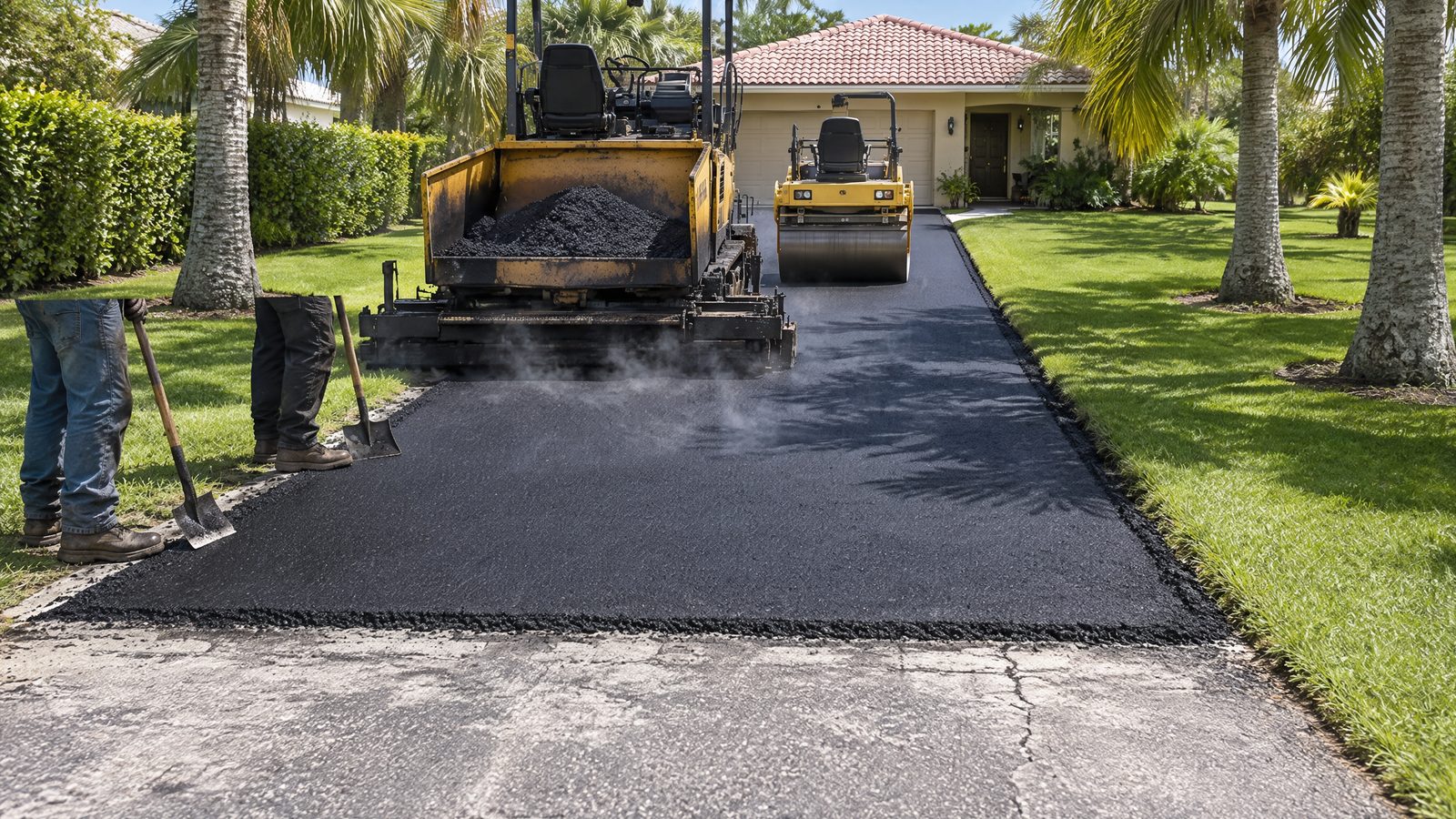
Resurfacing, often called an overlay, places a fresh layer of hot-mix asphalt directly on top of existing pavement. The old surface stays where it is and becomes part of the structure. Done on the right pavement, it gives you a new driving surface and a renewed look with far less disruption than a full tear-out.
The catch is that an overlay is only as good as what it sits on. It renews the surface; it does not strengthen a base that has already failed. That makes the decision about whether to resurface more important than the resurfacing itself, and it is the part of the job most worth getting a careful opinion on.
This page walks through which pavement qualifies, the preparation that decides how long an overlay lasts, and the details at garages, curbs and drains that are easy to overlook until water starts pooling in the wrong place.
Which Pavement Is a Good Candidate
The best candidates are surfaces that have aged rather than broken. The asphalt has turned gray and dry, small stones are loosening at the surface, and there may be scattered hairline or block cracks from years of sun. Underneath, though, the pavement still feels firm. There is no rutting in the wheel paths, no soft give when you step on the low spots, and no widespread web of connected cracks.
Poor candidates show the opposite. Alligator cracking across the main traffic areas, patches that keep sinking, potholes that reopen after every wet spell and standing water in the same dips all point to a base that has lost its strength. Covering that with a new layer hides it for a short time, and then the old pattern prints straight through. In that situation, full replacement or full-depth repair of the failed sections is the better investment.
Many driveways and lots fall somewhere in between: mostly sound, with a few failed areas. Those can still be resurfaced, but only after the bad sections are cut out and rebuilt so the whole surface the overlay sits on is solid.
Repairs and Cleaning Come First
Preparation decides most of an overlay's life. Any section with base failure should be saw-cut, excavated and rebuilt before the new layer goes down. Wide cracks are cleaned out and filled, and potholes are patched with hot mix so they do not settle under the overlay later. Vegetation growing in cracks or along edges has to be removed, roots and all.
The surface is then swept or blown clean. Dust, sand, leaves and oil spots all weaken the bond between old and new asphalt. Heavy oil staining, common where cars have parked for years, may need to be cleaned or primed so the new layer does not slide or soften there.
Tack Coat: The Layer You Never See
Before paving, a thin layer of asphalt emulsion called tack coat is sprayed over the old surface. It looks unimpressive, a brown film that turns black as it breaks, but it is what glues the new layer to the old one. Without it, the two layers act separately, and the overlay can slip, crack along wheel paths or peel at the edges.
Tack has to be applied evenly and allowed to break before paving. Too little leaves bare spots without bond. Too much can bleed up through the new mat in hot weather. It is a small item on a quote, and it is worth confirming that it is there.
Milling at Garages, Curbs and Drains
An overlay adds height. On open pavement that hardly matters, but wherever the surface meets something fixed, the extra height can cause real problems. At the garage door the driveway may end up higher than the slab, sending rainwater toward the house instead of away from it. Along a curb or gutter the reveal shrinks, so water has less room to flow. Around storm inlets and valve boxes the pavement can rise above the grate.
The standard fix is milling. A milling machine grinds away a band of old asphalt at those transitions so the new layer finishes flush with the garage, sidewalk, curb or street. On commercial lots, the entire surface is sometimes milled before an overlay to control height and remove the most oxidized material. A resurfacing quote should say where milling happens, because skipping it at the garage is one of the most common causes of water complaints afterward.
Inlets, cleanouts and utility covers inside the paved area also need attention. They may have to be raised with adjustment rings so they sit level with the finished surface instead of becoming a sunken hole for water and tires.
Reflective Cracking and How Overlays Age Here
Cracks in the old pavement can work their way up into the new layer over time, a process called reflective cracking. It is most noticeable when asphalt has been placed over an old concrete slab, because the joints in the concrete keep moving with temperature and moisture and show up as straight lines in the overlay. Crack filling before paving reduces it, and some projects use a fabric interlayer over problem areas. Even so, some reflective cracks are normal, and keeping them sealed keeps water out of the structure.
In this climate the main enemies of any asphalt surface are sun and water rather than frost. Ultraviolet light and heat oxidize the binder, turning the surface brittle and gray, while summer storms test every crack and low spot. An overlay restarts that clock. Sealcoating once the new layer has cured, filling cracks while they are still small and keeping water moving off the pavement are what stretch the time before the next major job.
Timing, Curing and Living With the Work
Resurfacing is usually faster than replacement, often a day or two for a residential drive once repairs are complete, because there is no full tear-out or base rebuild. Paving is scheduled for dry conditions, so during the summer wet season crews tend to work in the mornings ahead of afternoon storms.
A fresh overlay is soft at first, especially in Tampa heat. Cars can generally use it within a few days, but turning the wheels while parked, motorcycle kickstands, jack stands and trailer tongues can leave marks for weeks. Edges are the most vulnerable part, so keep tires away from them while the new asphalt hardens. Hold off on sealcoating for several months to let the surface cure fully.
Overlays are priced per square foot, and the published ranges for resurfacing, tear-out and full replacement are compared side by side on the Tampa asphalt driveway cost guide. If the base turns out to be failing across the drive, driveway replacement is the lasting fix.
What’s Included
- An assessment of whether the base is sound enough for an overlay
- Cut-out and rebuilding of any failed sections before resurfacing
- Crack cleaning and filling, and hot-mix patching of potholes
- Thorough cleaning of the old surface, including heavy oil spots
- Milling at the garage, sidewalks, curbs and street to keep finished heights right
- An even tack coat to bond the new layer to the old one
- A new hot-mix asphalt layer placed and rolled to a smooth finish
- Adjustment of inlets and covers to sit level with the new surface
Why It Matters in Tampa
In Hillsborough County, most aging asphalt shows the effects of sun before it shows structural failure. Years of strong ultraviolet light and heat oxidize the binder, so driveways and lots turn gray, rough and lightly cracked while the base below can still be in good shape. That makes resurfacing a common and sensible option here, as long as the evaluation is honest about drainage. Flat lots, sandy soil and a water table close to the surface mean that low spots and failed areas need to be fixed before the overlay, not covered by it. Raising the surface without milling at the garage can also push storm water toward the house, a real concern during the summer rains.
Asphalt Resurfacing in Tampa — FAQ
What is the difference between resurfacing and replacing a driveway?
Resurfacing adds a new layer of asphalt over the existing pavement, which stays in place. Replacement removes the old asphalt, fixes the base and paves from scratch. Resurfacing is less disruptive, but it only works when the base underneath is still solid.
Can every driveway be resurfaced?
No. If the pavement has widespread web-like cracking, ruts, sinking patches or standing water, the base has failed and an overlay will crack again quickly. Those driveways need the failed sections rebuilt or full replacement.
Will a new layer make my driveway higher than the garage floor?
It can, which is why the edge at the garage is usually milled down first so the new surface finishes flush. Without milling, water can drain toward the house instead of away from it.
Why do old cracks sometimes show up in the new surface?
Movement in the old pavement can work its way up into the overlay, especially over concrete joints. Filling cracks before paving reduces it, and sealing any cracks that do appear keeps water out.
How long does resurfacing take?
A typical residential driveway can often be resurfaced in a day or two once repairs are finished, because there is no full tear-out. Larger lots may be done in sections so the business can stay open.
When should a resurfaced driveway be sealcoated?
Wait several months so the new asphalt can cure. After that, sealcoating on a regular schedule and filling cracks while they are small helps the overlay last.
Other Services
- Asphalt Paving in Tampa
- Asphalt Driveways in Tampa
- Asphalt Repair in Tampa
- Asphalt Sealcoating in Tampa
- Parking Lot Paving in Tampa
- Driveway Replacement in Tampa
- Gravel to Asphalt Conversion in Tampa
- Parking Lot Striping in Tampa
Areas Served
- Asphalt Resurfacing in Hillsborough County
- Asphalt Resurfacing in Brandon
- Asphalt Resurfacing in Riverview
- Asphalt Resurfacing in Temple Terrace
- Asphalt Resurfacing in Lutz
- Asphalt Resurfacing in Plant City
Wondering what the job runs? See what an asphalt driveway costs in Tampa.
Free Asphalt Resurfacing Estimate in Tampa
Free, no-obligation estimates across Hillsborough County. Tell us about your driveway or lot.
Call (656) 208-2400